

Maritime Infrastructure
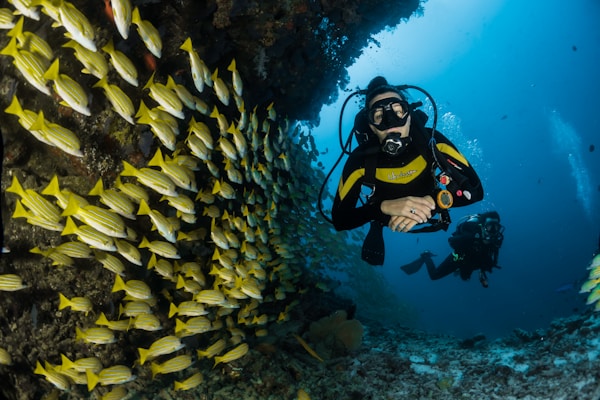
Ports, subsea cables, and offshore assets face vessel-based threats, dark ships, and coordinated disruption across open ocean routes.
- Dark vessel detection
- Cable corridor monitoring
- Port perimeter
The AI copilot for critical infrastructure operators. Sentinel OS orchestrates real-time threat detection, AI-assisted response coordination, and autonomous deterrence — before damage occurs.
Sentinel OS turns fragmented cameras, sensors, maps, alerts, and field teams into one live operating picture — so leaders can detect threats, coordinate response, and protect people and infrastructure in real time.
A unified operating system purpose-built to protect the world's most critical infrastructure and people.
PROVEN OPERATIONAL IMPACT
Others monitor. We respond.
Sentinel OS is the only platform that goes beyond monitoring to orchestrate real-time response and deterrence across critical infrastructure. AI-assisted threat detection, human-commanded asset dispatch, and incident resolution — in minutes, not hours.
Crowd safety, access control, medical response
Vessel tracking, cable protection, port security
Substation monitoring, grid protection, pipeline security
Principal safety, route security, estate monitoring
Emergency coordination, evacuation, resource deployment
Perimeter defense, surveillance, threat deterrence
SpaceTime gave us visibility we never had before. Within 48 hours of deployment, we detected unauthorized vessel activity near our cable infrastructure that would have gone completely unnoticed.
AI-assisted threat detection with human-commanded response. Mission-focused. Built to monitor, recommend, and act — with operators in command.
Learn More About Our TechnologyFuse sensors, AIS, radar, satellite, and more.
Continuously score and predict emerging threats.
Deploy the right asset in the right place, on human command.
Verify, communicate, and actively deter threats.
Every mission makes the system smarter.
A four-stage closed loop — detect, analyze, respond, and learn — running 24/7 without human intervention.
108+ sensors continuously monitor your infrastructure — from submarine cables to satellite imagery.
AI scores threats in under 500ms using our 7-factor formula — no human bottleneck in the critical path.
AI-recommended actions with operator approval — drone, vessel, or digital countermeasure — deployed in under 5 minutes.
Every mission feeds back into the model. Each incident makes the system faster, more accurate, and more adaptive.
Why It Matters
Most teams already have cameras, sensors, radios, maps, and dashboards.
The problem is that they are fragmented.
Sentinel OS unifies them into one decision layer.
Sentinel OS is deployed across six verticals. Maritime, critical infrastructure, venues, defense, disaster response, and executive protection — each a first-class product.
Ports, subsea cables, and offshore assets face vessel-based threats, dark ships, and coordinated disruption across open ocean routes.
Energy grids, water utilities, and industrial control systems are the highest-value targets for both physical sabotage and cyber intrusion.
Large-scale public events require real-time monitoring of thousands of people, access points, and perimeter zones simultaneously.
Multi-domain awareness for defense agencies — linking space weather, cyber telemetry, and physical ground truth into a single operational picture.
Natural disasters require immediate situational awareness across geography, communications, and logistics before first responders arrive.
Real-time monitoring for high-value individuals, executive teams, and mobile assets — from route security to incident escalation.
Every component is purpose-built for critical infrastructure operators. No generic observability tools. No adapters.
7-factor composite scoring engine produces a 0-100 threat index per asset. Threats are classified, prioritized, and escalated automatically.
Automated incident creation, intelligent routing, escalation workflows, and resolution tracking with full audit trails.
Deploy inspection drones and autonomous assets within minutes of a threat alert. Multi-asset coordination with real-time telemetry.
Four specialized agents run continuously in parallel across all data streams — monitoring, analyzing, reporting, and escalating 24/7.
118 data sources — maritime, space, cyber, environmental — unified into a single continuously updated intelligence layer.
The only platform that links solar, cyber, maritime, and physical events into a single correlated timeline and threat graph.
Native connectors to major SIEM platforms, open APIs for custom integrations, and SOC-ready workflows. Sentinel OS fits into how your team already operates.
Every relevant signal — maritime, space, cyber, and environmental — ingested, normalized, and correlated automatically.
From first contact to full operational deployment
Identify and catalog all protected infrastructure
Connect existing sensors and data sources
Train your team on the Command Center
Go live with full protection
Deploy in days, not months. Works with your existing tools and data pipelines.